
Description
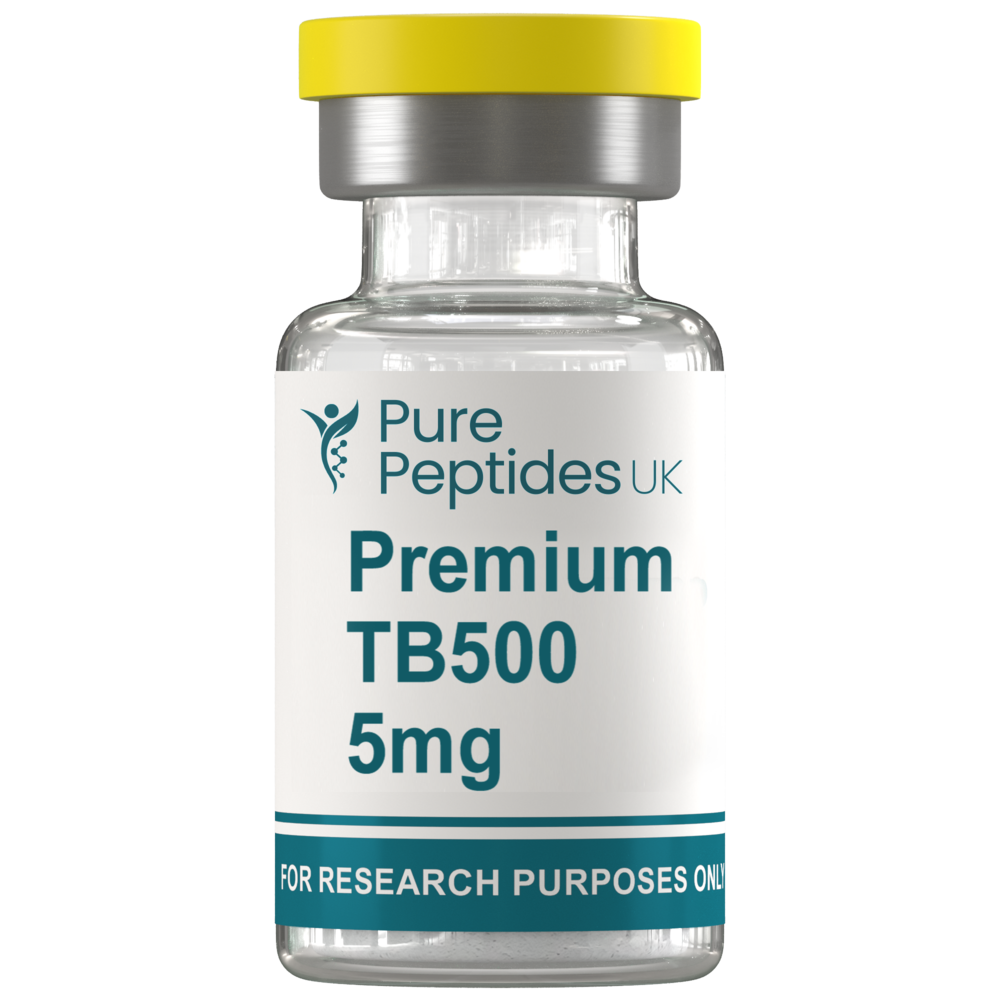
Premium TB-500 5 mg (Thymosin Beta-4 Acetate)
Exploring the Potential of TB-500: A Versatile Research Peptide
In the field of biochemical and performance research, scientists continue to investigate compounds that may support cellular recovery, regeneration, and tissue health. One such peptide that has captured significant attention is TB-500, the synthetic version of the naturally occurring Thymosin Beta-4, found in nearly all human and animal cells.
TB-500 plays a crucial role in the regulation of actin, a structural protein central to cell movement, growth, and repair. Owing to these characteristics, it remains a focal point of studies into tissue regeneration, inflammation modulation, and recovery mechanisms.
Understanding TB-500
TB-500 is a 43-amino-acid peptide involved in multiple biological processes, including cell migration, differentiation, and proliferation. Naturally present in tissues such as muscle, wound sites, and blood cells, it is associated with the body’s natural repair and healing responses.
Its ability to influence angiogenesis (the development of new blood vessels) has made TB-500 particularly interesting in laboratory studies focused on tissue growth, oxygen delivery, and vascular function.
Mechanism of Action
TB-500 is believed to function by binding to actin and regulating its polymerisation, which promotes cell structure and mobility. This activity appears to encourage angiogenesis, cell regeneration, and tissue repair.
Additionally, TB-500 exhibits anti-inflammatory properties that may help reduce inflammation and support immune modulation in controlled research environments.
Research Focus Areas
-
Accelerated Recovery – Laboratory studies suggest that TB-500 may support cellular regeneration and tissue repair, particularly following injury to muscle or connective tissue.
-
Performance and Endurance Research – In sports-science contexts, TB-500 is being examined for its potential influence on muscle strength, endurance, and recovery rate, possibly aiding in improved adaptation to physical stress.
-
Inflammation and Pain Modulation – Owing to its apparent anti-inflammatory activity, TB-500 is being studied for its possible applications in pain management and mobility restoration following chronic or repetitive strain injuries.
-
Hair Growth Investigation – Preliminary evidence indicates that TB-500 may encourage hair follicle activation and regrowth, though additional research is needed to substantiate this effect.
Scientific Context and Ongoing Research
While further investigation is required to clarify its mechanisms, TB-500 continues to be a key peptide of interest within the fields of cellular biology, tissue engineering, and regenerative medicine.
Its wide-ranging potential—from recovery support to angiogenesis—makes it an important candidate for ongoing academic and laboratory-based research.
Technical Details
- Synonyms: Thymosin Beta-4, Tβ4, Beta-Thymosin 4, Timbetasin
- Sequence: SDKPDMAEIEKFDKSKLKKTETQEKNPLPSKETIEQEKQAGES
- IUPAC Condensed: Ser-Asp-Lys-Pro-Asp-Met-Ala-Glu-Ile-Glu-Lys-Phe-Asp-Lys-Ser-Lys-Leu-Lys-Lys-Thr-Glu-Thr-Gln-Glu-Lys-Asn-Pro-Leu-Pro-Ser-Lys-Glu-Thr-Ile-Glu-Gln-Glu-Lys-Gln-Ala-Gly-Glu-Ser
- Molecular Weight: ~4,963 g/mol
- CAS Number: 77591-33-4
- PubChem CID: 16132341
- Further References: PubChem
Stability and Storage
Store lyophilised peptide at –20 °C.
Aliquot the product after reconstitution to avoid repeated freeze–thaw cycles.
Reconstituted peptide may be stored at 4 °C for short-term use.
When stored appropriately at –20 °C, the lyophilised product remains stable until expiry.
Source and Reconstitution
Source: Biosynthesis
Reconstitution: Reconstitute with Bacteriostatic Water
Usage
Product is intended strictly for LABORATORY RESEARCH ONLY.
TB-500 5 mg for sale at Pure Peptides UK is limited to scientific and educational research purposes.
Only purchase TB-500 5 mg if you are a licensed researcher.
Images for illustration purposes only.
Conclusion
Premium TB-500 5 mg offers a higher-volume research format of the synthetic analogue of Thymosin Beta-4, designed for advanced investigations into cellular repair, angiogenesis, and recovery biology.
Its extensive biological relevance continues to make it a key peptide for laboratory study, contributing to the broader understanding of tissue regeneration and performance research.
Reviews
There are no reviews yet