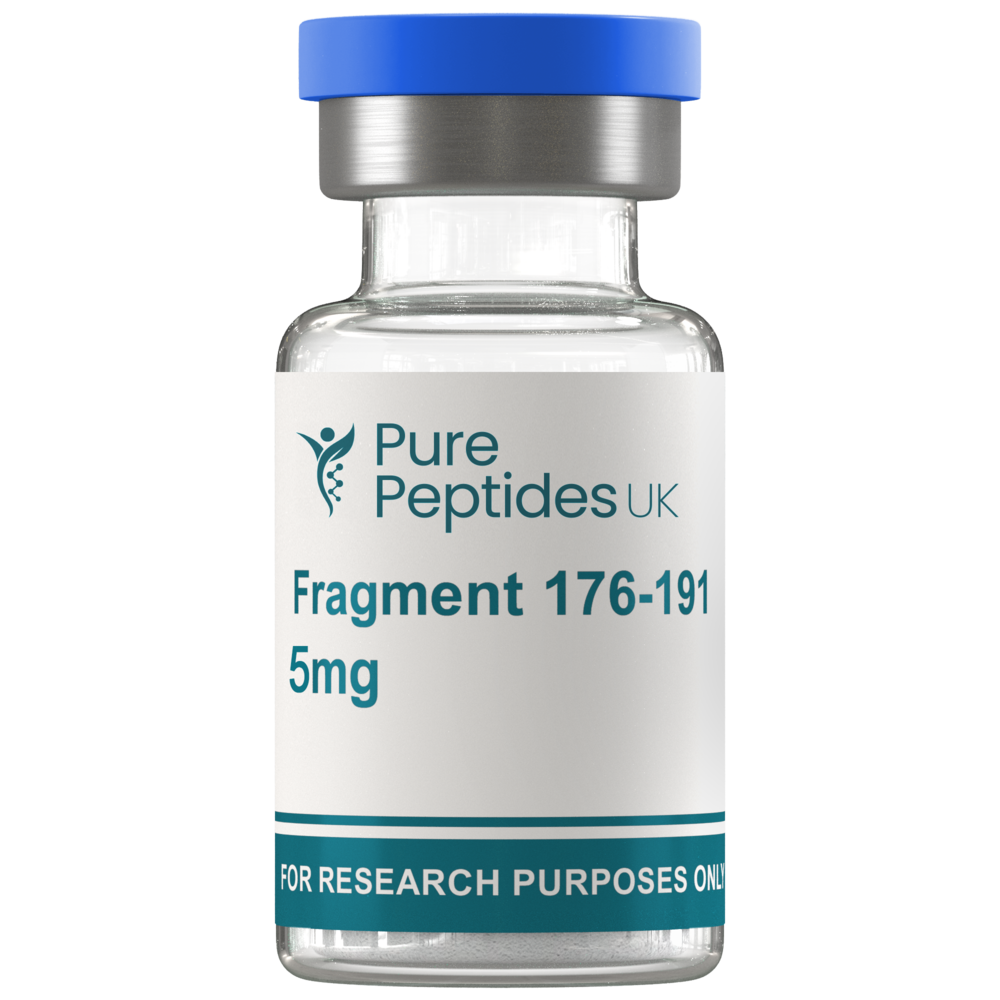
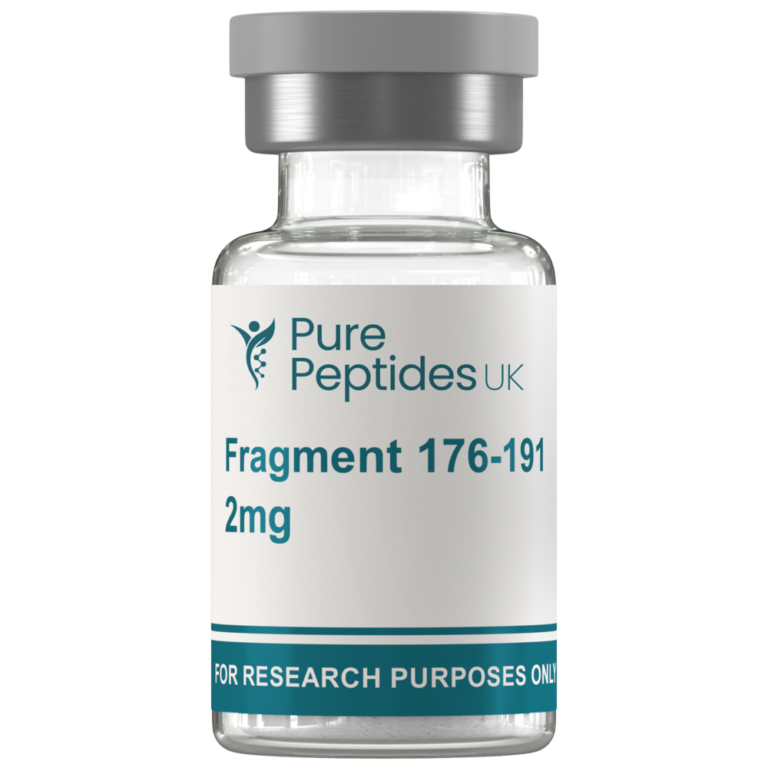
Fragment 176-191 5mg

$28.00

Category

Description

Fragment 176-191 – 5 mg

Fragment 176-191 is a synthetic peptide fragment derived from the C-terminal section of human growth hormone (hGH), comprising amino acids 176 through 191. Supplied as a lyophilised powder for research use only, this fragment is used in laboratory investigations into fat metabolism, hormone signaling, and metabolic regulation. Because it isolates a functional segment of hGH, it allows focused study of lipid-related mechanisms without the broader systemic effects of full-length growth hormone.

Research Focus and Areas of Interest

1. Fat Breakdown Mechanisms

Fragment 176-191 promotes lipolysis (break-down of fat) and appears able to suppress lipogenesis (fat accumulation), making it useful for studies investigating how body fat is mobilised under different metabolic conditions.

2. Metabolic Regulation Pathways

Researchers use this fragment to examine effects on insulin sensitivity, glucose metabolism, and related enzymes, as well as its influence on the balance between energy storage and energy use.

3. Hormonal Cascade Interaction

Since Fragment 176-191 is a part of the hGH molecule, it helps in probing how fragments of GH might influence downstream hormonal axes — including potential effects on IGF-1 or feedback inhibition — without invoking full GH stimulation.

4. Safety & Endocrine Impacts

Animal studies suggest there may be contexts in which Fragment 176-191 influences glycaemic parameters; so labs often examine safety markers alongside metabolic outcomes when using this fragment.

Conclusion

Fragment 176-191 (5 mg) offers a controlled, high-dose research peptide fragment for probing fat metabolism, hormonal signaling, and metabolic regulation in lab settings. Supplied strictly for research use only, it is not intended for therapeutic, diagnostic, or veterinary use.


Technical Information:

• Synonyms: HGH Fragment 176-191; hGH (176-191)

• Modified Single-Letter Sequence: Tyr-Leu-Arg-Ile-Val-Gln-Cys-Arg-Ser-Val-Glu-Gly-Ser-Cys-Gly-Phe

• IUPAC Condensed Amino Acid Sequence: Tyrosine-Leucine-Arginine-Isoleucine-Valine-Glutamine-Cysteine-Arginine-Serine-Valine-Glutamate-Glycine-Serine-Cysteine-Glycine-Phenylalanine

• Molecular Weight:~1799.1 g/mol

• CAS Number: 66004-57-7

• PubChem CID: 16131230

• Further References: PubChem Entry


Stability, Source, and Handling

• Stability: Stable for up to 36 months when stored at -20 °C or colder, protected from moisture and light.

• Source: Synthesised via solid-phase peptide synthesis; high purity with Certificate of Analysis (COA) confirmation.

• Reconstitution: Reconstitute in sterile water or PBS under aseptic conditions; aliquot and store at -80 °C after reconstitution to prevent degradation.

• Usage: Product is prepared for LABORATORY RESEARCH ONLY.
Reviews

There are no reviews yet

Only logged in customers who have purchased this product may leave a review.

Related Products

Epitalon 10mg
BPC-157 5mg + TB500 5mg
5-Amino-1MQ 50mg
Adipotide (FTPP) – 5mg Adipotide (FTPP), also known as prohibitin-targeting peptide 1, is a synthetic peptidomimetic supplied as a lyophilised powder for research use only. It is designed with a bifunctional structure: a targeting sequence that binds to prohibitin/ANXA2 proteins on blood vessels, and a pro-apoptotic domain (_D(KLAKLAK)_2) that disrupts mitochondrial function. This selective action makes Adipotide a research tool of interest in studies of adipose tissue biology, metabolic regulation, and vascular targeting strategies. Research Focus and Areas of Interest 1. Targeted Fat Tissue Reduction Researchers are investigating Adipotide’s ability to bind endothelial cells in white adipose tissue and induce apoptosis. This targeted mechanism allows study of fat mass reduction via vascular disruption, without direct effects on muscle or organ tissues. 2. Metabolic Regulation Pathways By altering adipose tissue mass, Adipotide may influence glucose handling and insulin response. Research has shown interest in how vascular targeting peptides might intersect with pathways linked to type 2 diabetes and systemic metabolism. 3. Vascular Targeting in Oncology Because prohibitin and related proteins can also appear in tumour blood vessels, Adipotide is being studied as a model for selective angiogenic disruption. This opens a potential pathway for research into cancer vascular biology. 4. Tissue Remodeling and Signaling Laboratory studies often explore Adipotide (FTPP) for its role in tissue remodeling, focusing on signaling pathways that regulate cellular communication and local microenvironments. Conclusion Adipotide (FTPP) represents a unique approach to studying fat tissue biology and targeted vascular disruption. Its design allows exploration of obesity, metabolic health, and oncology pathways in controlled laboratory settings. Supplied strictly for research use only, it is not intended for human or veterinary use. Technical Information: • Synonyms: Adipotide; FTPP; Prohibitin-TP01 •Modified Single-Letter Sequence: CKGGRAKDC-GG-D(KLAKLAK)₂ • IUPAC Condensed Amino Acid Sequence: Cys-Lys-Gly-Gly-Arg-Ala-Lys-Asp-Cys-Gly-Gly-D-Lys-Leu-Ala-Lys-Leu-Ala-Lys-Leu-Ala-Lys • CAS Number: 859216-15-2 • PubChem CID: 163360068 • Further references: PubChem Link Stability, Source, and Handling Stability: Stable for up to 36 months when stored at –20 °C or below, away from light and moisture. Source: Produced via solid-phase peptide synthesis; supplied with Certificate of Analysis (COA) confirming purity and identity. Reconstitution: Reconstitute with Bacteriostatic Water. After reconstitution, aliquot and store at –80 °C to prevent degradation. Usage: Product is prepared for LABORATORY RESEARCH ONLY. Adipotide for sale at Pure Peptides UK is limited to scientific research and education only – Only buy Adipotide if you are a licenced researcher.