
Description
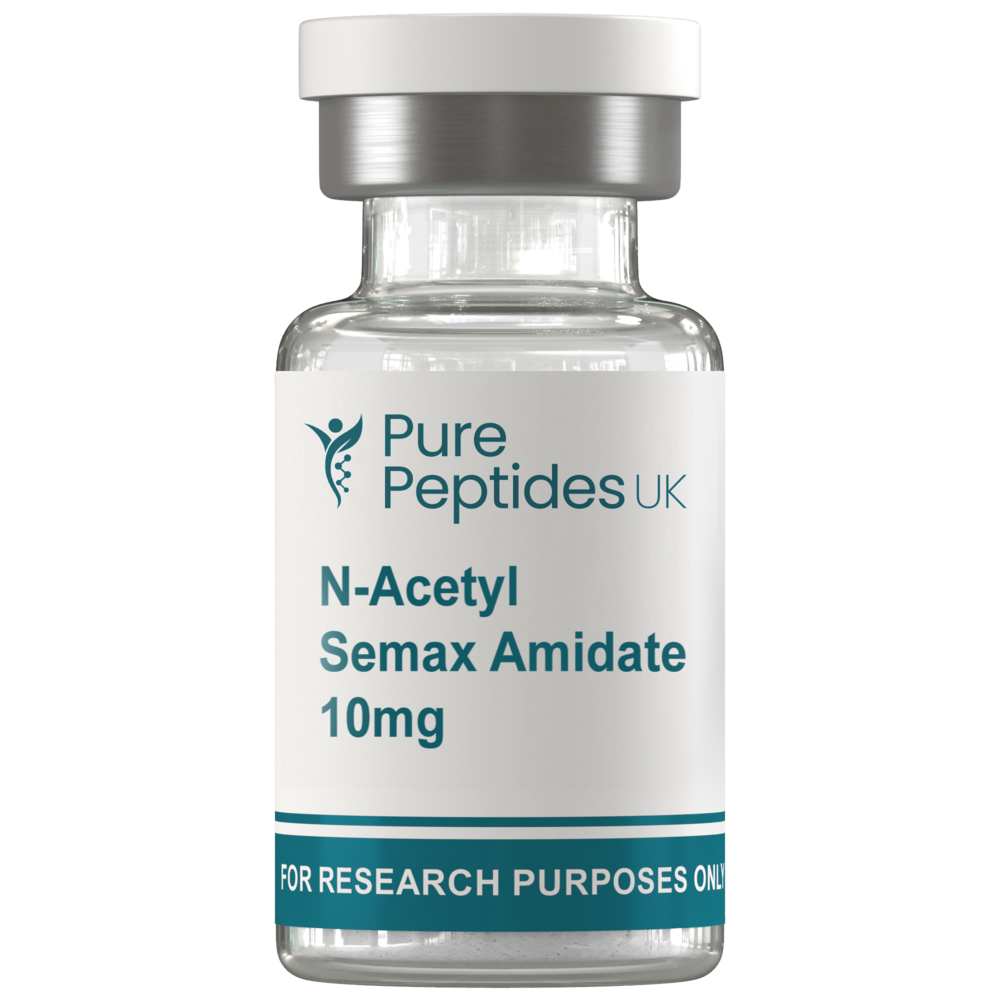
N-Acetyl Semax Amidate 10mg
N-Acetyl Semax Amidate is a synthetic heptapeptide and a structurally enhanced derivative of Semax, a peptide originally developed from the adrenocorticotropic hormone (ACTH) fragment. This acetylated and amidated version has been modified for increased stability, bioavailability, and receptor affinity, making it a subject of growing interest in research focusing on neuromodulation, cognitive function, and peptide pharmacokinetics.
Research Focus and Areas of Interest
1. Cognitive Function and Neuroprotection
Semax-based peptides have been extensively studied for their interaction with key neuromodulatory systems, particularly those involved in cognition, memory, and neuroplasticity. Researchers have explored N-Acetyl Semax Amidate in relation to:
- Brain-Derived Neurotrophic Factor (BDNF) expression, which is crucial for synaptic plasticity and neuronal survival.
- Glutamatergic pathways, which play a key role in learning and long-term memory formation.
- Dopaminergic and serotonergic systems, which influence motivation, mood stability, and executive function.
The N-acetylation and amidation modifications provide this peptide with greater resistance to enzymatic degradation, ensuring a more sustained presence in biological environments. This makes N-Acetyl Semax Amidateparticularly valuable in laboratory settings where peptide longevity and interaction dynamics are being studied.
2. Stress Resilience and Adaptive Response
Semax and its derivatives have been examined in research focusing on adaptive responses to physiological and environmental stressors. Investigations suggest that Semax-based peptides may influence the hypothalamic-pituitary-adrenal (HPA) axis, which governs stress response and hormonal balance. Some studies propose that this peptide could modulate corticotropin (ACTH) signaling, contributing to a more efficient stress-adaptive response.
Researchers are also investigating how N-Acetyl Semax Amidate may affect cognitive performance under stress conditions, exploring its potential impact on mental clarity, focus, and resistance to cognitive fatigue.
3. Neuroimmune and Anti-Inflammatory Pathways
Recent research into Semax-related peptides has also explored their influence on neuroimmune signaling and inflammatory regulation. Some studies suggest that these peptides may:
- Modulate cytokine levels, contributing to immune homeostasis.
- Influence oxidative stress pathways, which play a role in neuronal health.
- Regulate microglial activity, the immune cells of the central nervous system.
These findings have led to growing interest in N-Acetyl Semax Amidate as a research tool in neuroinflammation and immune-neural interactions.
4. Peptide Stability and Bioavailability Research
Compared to standard Semax, N-Acetyl Semax Amidate features two significant structural modifications:
- N-acetylation, which enhances resistance to enzymatic breakdown and extends peptide half-life.
- Amidation at the C-terminal, which may improve receptor affinity and bioavailability.
These improvements make it a valuable subject for research into peptide-based drug development, receptor-ligand binding, and pharmacokinetics.
Conclusion
With its structural enhancements and broad research applications, N-Acetyl Semax Amidate is a key peptide in laboratory studies focused on neuromodulation, stress adaptation, cognitive performance, and neuroimmune interactions. Researchers continue to investigate its potential role in supporting neuroplasticity, adaptive response, and molecular signaling.
For research use only. Not approved for human or veterinary applications.
Technical Information:
• Synonyms: Acetyl-Semax-Amide, N-Acetyl-Semax-Amidate, Ac-Semax-NH₂
• Modified Single-Letter Amino Acid Sequence: Ac-MEHFPGP-NH₂
• IUPAC Condensed Amino Acid Sequence: Ac-Met-Glu-His-Phe-Pro-Gly-Pro-NH₂
• Molecular Weight: 893.0 g/mol
• CAS Number: 4037-01-8 (Base Semax form, modified variant CAS may vary)
• PubChem CID: Pending (No direct PubChem entry available for this modified variant)
Stability: Store lyophilised protein at -20°c. Aliquot the product after reconstitution to avoid repeated freezing/thawing cycles. Reconstituted protein can be stored at 4°c for a limited period of time. The lyophilised protein remains stable until expiry date when stored at -20°c. For more information about storage, click here
Source: Biosynthesis
Reviews
There are no reviews yet